


Life at Sea
What to Expect During Your Sea Year
During Sea Year, midshipmen truly live the motto "The World is Our Campus," experiencing firsthand the life of a merchant mariner while visiting ports all over the globe. For most, it is the first real opportunity for self-reliance, requiring a delicate balance between shipboard duties, independent academic work, and adapting to a completely new living environment. To help you prepare, here is what you need to know about everyday life aboard a working vessel.
Postcards from Sea Year

Serve
Mickel McGann volunteering in Thailand, Pena School. USNS Tippecanoe.
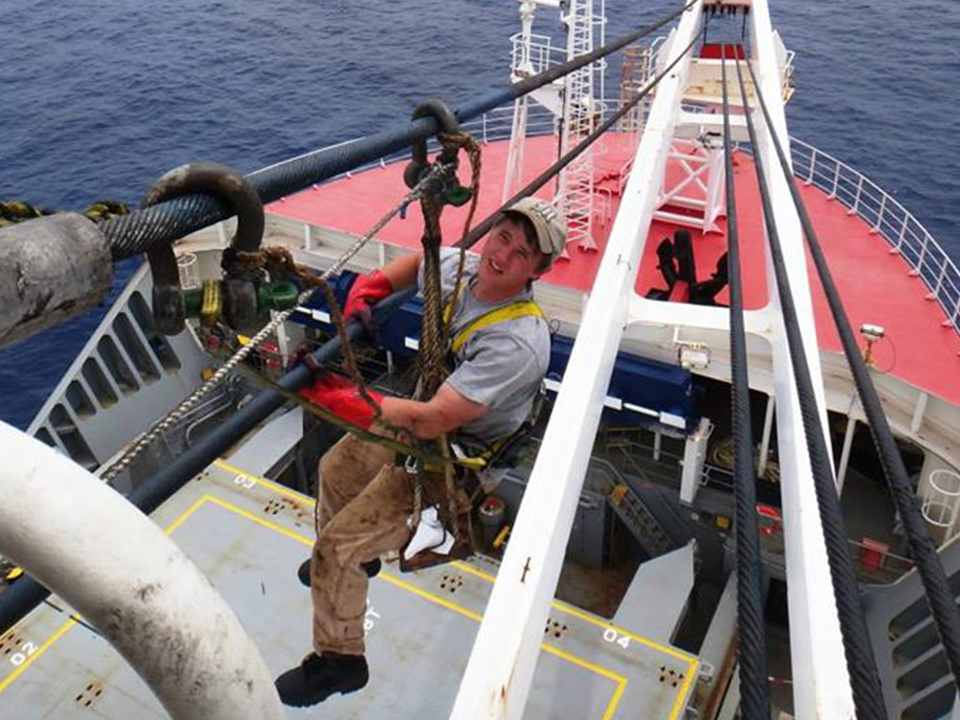
Learn
MIDN Nathanael Kutz in Thule, Greenland onboard the M/V Ocean Giant.

Explore
Midshipmen Yeik and Lindgren in Okinawa, Japan.
Your Living Quarters
While at sea, midshipmen are provided quarters and subsistence by the shipping company. Midshipmen are strictly expected to maintain a clean, orderly, and inspection-ready stateroom. This means making your bunk daily, cleaning the head and shower at least weekly, maintaining a clean deck, and washing down bulkheads and changing linens prior to detaching from the vessel.
Because ships operate around the clock, there are crewmembers off-watch and sleeping at all times, meaning noise (like loud music) should never be heard outside your cabin. For safety and privacy, all cadet staterooms should have functioning door locks.
The Sea Year Routine

The 8-3-7 Rule
Daily commitment involves 8 hours of vessel work and 3 hours of sea projects. 7 days per week.

Global Reach
Midshipmen visit an average of 18 foreign countries during their sea training.

The Internship Phase
A 2-to-6 week shoreside management internship may be required during the second sailing period.
Meals and Dining Etiquette
Dining at sea is a structured and professional affair. Midshipmen mess with the licensed officers in the Ship's Mess and are required to wear clean clothes and maintain proper etiquette at all meals. Meal times are generally standard (e.g., breakfast from 0730-0830, lunch from 1130-1230, and dinner around 1700-1800), and you are expected to be on time, arriving no later than thirty minutes before the meal ends.
If you are assigned to a U.S. Navy vessel, dining in the wardroom requires additional formalities. You must ask the highest-ranking officer for permission to join the table, ask to be excused when finished, and never wear a cover (hat) in the wardroom.
Work, Watch, and Study Schedules
The Academy's training philosophy is "doing is learning". You can expect to work eight hours a day, seven days a week, often through day work (0800-1700), rotating four-hour watches, or a combination of both. Tardiness is strictly prohibited; midshipmen should always report to duty at least ten minutes early.
In addition to your eight-hour workday, you are expected to dedicate at least three hours of your own time each day to work on your Sea Projects. Midshipmen are also encouraged to report to all docking and undocking activities to maximize their learning, even if these events occur outside of normal working hours.
Professionalism and Interpersonal Dynamics
A ship is a confined "small society" made up of diverse personalities and specialized skills, meaning respect, maturity, and understanding are vital. Interactions with the ship's officers must be businesslike; officers should be addressed as "Mr." or "Ms." and the Master must always be called "Captain". Sexual relationships and displays of affection aboard ship are strictly prohibited.
Socializing safely and professionally is encouraged during the daily 1000 and 1500 "coffee times," which are excellent opportunities to engage with the crew, ask questions, and learn more about the maritime industry.
Personal Safety and SASH Prevention
Zero-Tolerance Policy: The USMMA and maritime companies enforce a strict zero-tolerance policy for Sexual Assault and Sexual Harassment (SASH), as well as zero tolerance for retaliation against anyone who reports it.
Reporting Misconduct: Midshipmen have an ethical obligation to report misconduct and can use restricted (confidential) or unrestricted reporting channels. Resources include a 24/7 hotline, the Sea Year Liaison, Victim Advocates, and the Coast Guard Investigative Service (CGIS).
Emergency Communications: Midshipmen are issued satellite communication devices and can use a designated code word to immediately be removed from the ship and returned to the Academy if they feel unsafe due to interpersonal violence, SASH, safety hazards, or a family emergency.
Amnesty Policy: Midshipmen who report SASH incidents—whether as survivors, witnesses, or bystanders—are protected under an amnesty policy, meaning they will not face disciplinary action for collateral Academy policy violations (such as underage drinking) occurring at the time of the incident.
Learn more about Sexual Assault Prevention and Response at USMMA.
Shipboard Amenities and Communications
While underway, you will have access to the ship's "slop chest"—a tax-free store where you can purchase basic necessities like toiletries, snacks, sodas, and work clothes. When you need to contact family and friends at home, you will primarily use vessel email and Academy-issued satellite communication devices.
Last updated: Friday, August 7, 2026