


Coursework at Sea
Academic Coursework at Sea: The Sea Project
While participating in Sea Year, midshipmen complete an extensive academic curriculum known as the Sea Project. The Sea Project consists of independent study courses that serve as your "homework" at sea, effectively turning your assigned vessel into a seagoing laboratory. The goal is to apply classroom knowledge to real-life environments by investigating the ship's construction, machinery, operation, and administration.
Study Expectations and Resources
You are expected to dedicate at least three hours of your own time each day, seven days a week, to work on your Sea Project courses.
You must be proactive in gathering information for your assignments. Primary resources include observing the ship itself, studying blueprints, and reading technical, equipment, and ship operating manuals. While ship's officers are valuable resources, they should only be approached with intelligent, thoughtful questions after you have thoroughly investigated all available manuals and texts yourself.
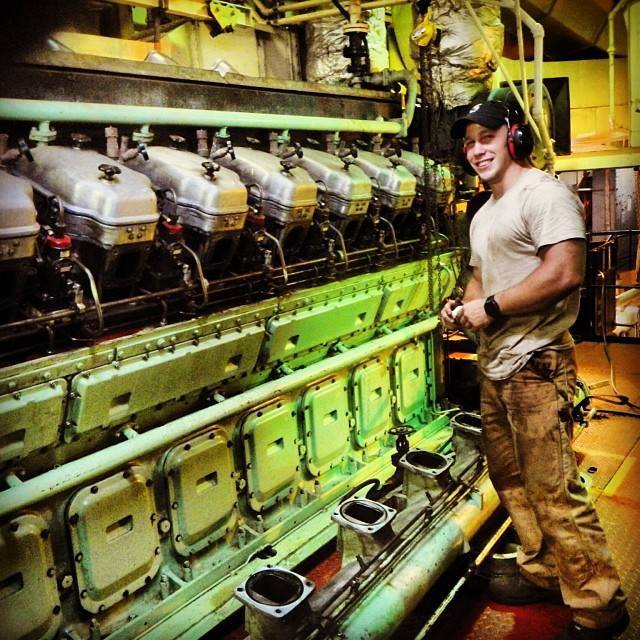 Postcards from Sea Year: Midshipman Yeik overhauling a diesel generator.
Course Requirements by Major
The specific courses you take will depend on your major and whether you are on your first or second sailing period:
- Deck Majors (First Sailing): Courses include Navigation 1, Navigation Law 1, Integrated Navigation Systems 1, Cargo Operations 1, Seamanship 1, Ship Structure/Stability, and Marine Engineering for Deck.
- Deck Majors (Second Sailing): Courses advance to Navigation 2, Navigation Law 2, Integrated Navigation Systems 2, Cargo Operations 2, Seamanship 2, Structure & Stability, Marine Communications, Maritime Business, and the Humanities Sea Project.
- Engine Majors (First Sailing): Courses focus on the Machine Shop Sea Project, Main Propulsion 1, Shipboard Systems 1, and Deck Operations.
- Engine Majors (Second Sailing): You will complete your International Convention on Standards of Training, Certification and Watchkeeping for Seafarers (STCW) Verification Book and take courses including Electrical Engineering, Maintenance Management, Marine Propulsion (Steam and Diesel), Shipboard Systems 2, Naval Architecture, Marine Refrigeration, Liquified Natural Gas (LNG) Cargo Systems & Operations, Maritime Business, and the Humanities Sea Project.
The Humanities Sea Project
During the second sailing period, all midshipmen must complete the Humanities Sea Project, a one-credit companion course designed to foster intellectual self-discovery and humanistic inquiry. This project requires you to read literary works across genres and time periods and write essays and journal entries reflecting on individual maritime experiences, shipboard leadership dynamics, and your place in the global maritime environment.
Submission and Grading Policies
Deadlines: All Sea Project courses are due on the first day of the academic term following the sea period. A course that is not submitted by the required date and time will be considered a non-submission and will automatically receive a failing grade of "F".
Grading: Projects are graded on a standard letter scale from A (Outstanding) to F (Failing) by Academy instructors. You must pass all required Sea Project courses to be eligible to take your U.S. Coast Guard license examination and to satisfy graduation requirements. Projects may include oral boards, as well as written exams.
Academic Integrity: You are bound by the Academy Honor Code when compiling your projects. Plagiarism, collaboration with other midshipmen, and "gundecking" (falsifying reports, records, or navigational calculations) are strictly prohibited and will be treated as Honor Code violations.
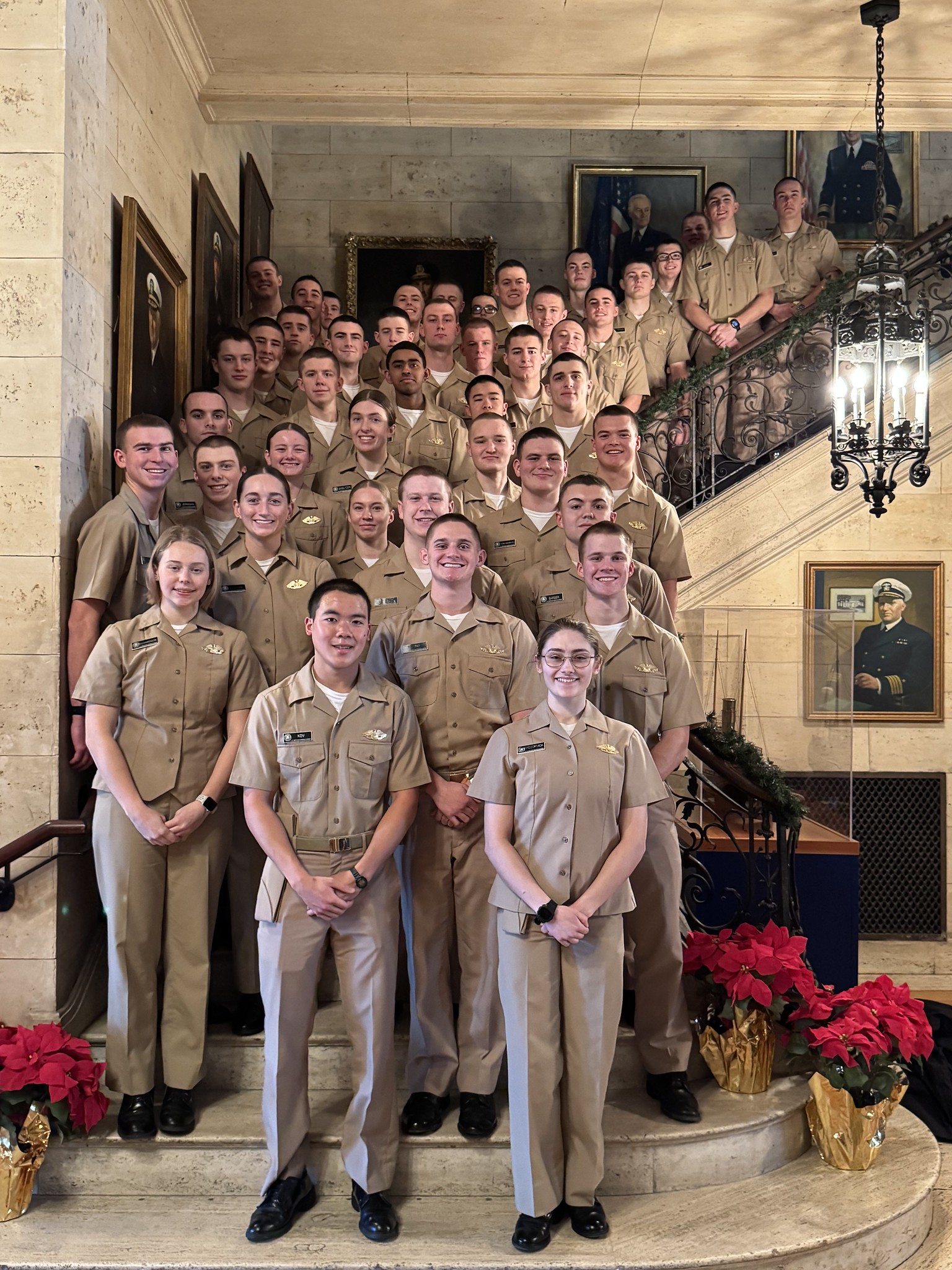
Sea Year Honor Ribbons
Academic and professional excellence is rewarded with Sea Year Ribbons. To qualify, midshipmen must earn a minimum QPA of 3.25, have no failing grades, and receive above average (3.0 or better) shipboard performance evaluations.
To view more photos of this and past year's Sea Year Ribbon Ceremony visit USMMA's Flickr account.
Last updated: Friday, August 7, 2026